
 By
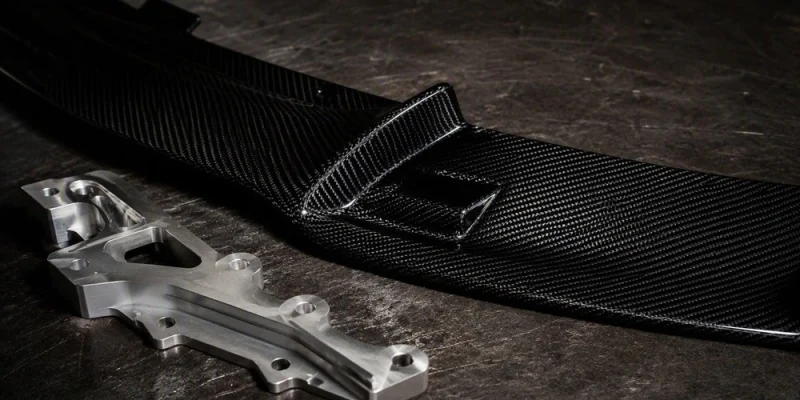
Factory floor truth: how a part is made decides how it ages.
Spec sheets do not commute. Real cars get door-dinged, sun-baked, pressure-washed, and parked under trees that drop sap with intent. So forget the lab for a minute: which material actually lives better on a daily driver, carbon fiber or aluminum? The answer after 30,000 real miles is less one-sided than either camp admits, and more useful than both.
Corrosion: Carbon’s Quiet Victory
Aluminum does not rust, but it does oxidize and pit, especially where road salt lives. Watch a ten-year-old aluminum hood in a winter state and you will find bubbling paint around the edges where corrosion crept underneath the finish and set up shop. Carbon fiber composite simply does not corrode. Not salt, not acid rain, not the chemistry experiment living under a battery tray. On a car that sees real winters, this alone settles arguments that spec sheets keep having.
Damage: the Honest Trade
Here is where aluminum fights back. Back into a pole with an aluminum panel and you get a dent: ugly, visible, and often repairable by any decent body shop for beer-adjacent money. Do the same to carbon fiber and you may get a crack. Or worse, invisible internal delamination that looks fine and fails later. Carbon’s impacts are sneaky; aluminum’s are honest. The carbon fiber vs aluminum data covers this brittle-versus-ductile divide properly, and it is the single most important daily-driving difference between the two materials.
The practical answer for daily cars is placement. High, safe panels, hood, roof, trunk, spoiler, are carbon territory, because nothing touches them but weather. Low strike zones that meet parking blocks and gravel every week might justify tougher composites; the carbon Kevlar hybrid weave exists precisely for those spots, absorbing impacts instead of hiding them.
Sun, Heat, and Car Washes
Carbon’s resin matrix is the part that ages. Cheap parts with weak clear coats chalk and yellow under UV within a couple of summers; quality parts with proper automotive clear coats shrug off a decade. Aluminum trim does not care about the sun at all, but it scratches if you look at it wrong. Neither is maintenance-free. They just bill you differently, on different schedules.
Heat deserves a word too. Aluminum conducts heat aggressively, about 205 W/m·K, which is useful in a radiator and less charming in a hood sitting over a hot turbo setup. Carbon insulates, keeping under-hood heat where it belongs. And construction quality matters more than either material here: the dry carbon vs wet carbon distinction is mostly a resin story, and resin is what sun, heat, and time actually attack.
The Inspection Habit That Makes Carbon Safe
The delamination worry has a simple antidote: a two-minute inspection habit. After any hit, press gently around the impact area and listen for crackling, flex the part lightly, and look for spider-web cracks under the clear coat in angled light. Do it monthly if the car is low. Carbon does not ask for much. It asks to be looked at. Owners who inspect find problems while they are still cosmetic. Owners who do not find them in the driveway, on a tow hook.
The Weekly Reality of Owning Both
Living with the two materials day to day is mostly about habits. The carbon car gets a slightly longer look after highway runs behind gravel trucks, and its owner learns where the parking blocks are. The aluminum car gets watched for the first bubble of corrosion at the panel edges each spring, and its owner learns to keep drain holes clear. Neither routine is burdensome. They are simply different checklists, laminated in different weather.
One more lived detail: bird droppings and tree sap punish a cheap clear coat on carbon within days, while a quality clear coat shrugs them off exactly like good paint does. Aluminum under paint behaves like any painted panel. So the real dividing line in daily life is not fiber versus metal. It is quality of finish versus everything else. Buy the good finish once and both materials become low-drama companions.
The Cost of Living Together
- Repairs: aluminum is cheaper and easier to fix, anywhere, by anyone.
- Upkeep: carbon needs UV-sound clear coat; aluminum needs corrosion watching.
- Weight: carbon saves 40 percent or more per panel, every mile, forever.
- Resale: clean carbon parts photograph like money when it is time to sell.
Thirty Thousand Miles Later
The daily-driver verdict is boring and useful: carbon on top, judgment down low, and quality construction over bargain construction every single time. Do that, and at 30,000 miles the carbon car still looks freshly detailed while the aluminum one is starting to show its winters. Materials age. Good materials, chosen by location and built properly, age slower. That is the whole secret of a car that still makes you look back at it in the parking lot.









Comments