
 By
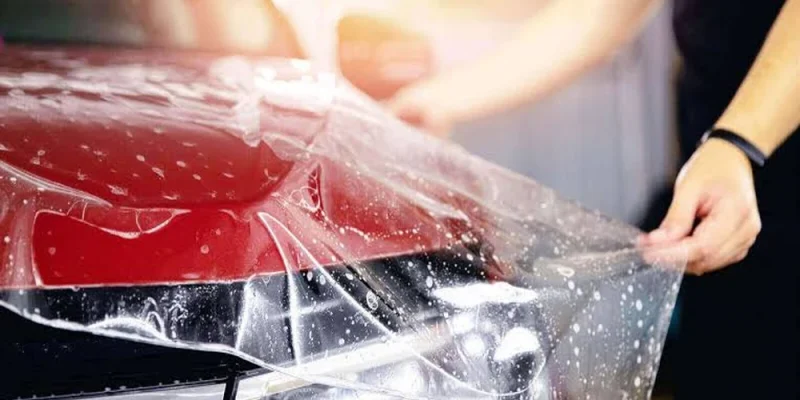
Most people use “car wash” and “detailing” as if they mean the same thing. They don’t, and the gap between them explains why one takes ten minutes and the other can take most of an afternoon.
A wash removes surface dirt. A detail restores and protects the finish, the cabin, and the small places a wash never reaches.
Add the word “mobile” and you also learn where the work happens: in your driveway or office parking lot instead of at a facility. Here’s how the services differ, and how to decide which one your car needs right now.
What a Car Wash Actually Does
A car wash is built for speed and consistency. Whether it’s a tunnel, an in-bay automatic, or a self-service bay, the goal is to loosen dirt, rinse it off, and dry the car in a few minutes.
Most facilities follow the same basic sequence: a pre-soak, soap or foam, a high-pressure rinse, and a drying pass, sometimes finished with a spray wax. It’s a good system for what it was designed to do, which is routine upkeep.
Regular washing keeps road film, pollen, and bird droppings from sitting on the paint. What it doesn’t do is correct anything, or reach into the door jambs, air vents, and seams where grime collects.
Touchless, Soft-Touch, and Hand Washing
Not every wash treats paint the same way. Touchless systems rely on stronger detergents and high-pressure water, while soft-touch systems use cloth or foam brushes that physically wipe the surface.
Each approach has trade-offs. Touchless washes avoid contact but can leave a thin film on stubborn grime, and brushes that aren’t well maintained can hold grit that leaves fine swirl marks over time.
A careful hand wash with clean mitts and fresh rinse water is gentler on the finish, but it’s slower. That extra time and attention is one reason it sits closer to detailing than to a drive-through wash.
What Detailing Involves Beyond Cleaning
Detailing is a restoration and protection process, done by hand and in stages. A full interior and exterior detail is a bit like deep-cleaning the grout instead of just mopping the kitchen floor.
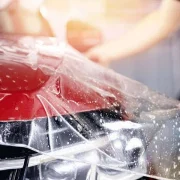
Outside, a detailer typically washes the car, then decontaminates the paint with a clay bar or chemical remover to lift particles a wash leaves embedded. Polishing can soften light swirl marks and oxidation, and a wax, sealant, or ceramic coating is applied afterward to protect the finish.
Inside, the work is just as hands-on. That means vacuuming seams and under the seats, extracting or steam-cleaning upholstery and carpet, and conditioning leather. A coffee spill or ground-in pet hair is where the gap between a wash and a detail becomes obvious.
Wax, Sealant, and Ceramic Coating
Paint protection comes in several forms, and each lasts a different length of time. Carnauba wax gives a warm gloss but wears off relatively quickly, synthetic sealants generally last longer, and ceramic coatings are designed to bond to the paint for the longest-lasting protection.
Longer-lasting doesn’t automatically mean better for every car. A daily commuter parked outdoors may get the most from a durable coating, while a weekend car kept in a garage can do well with a simple wax.
Whichever you choose, the paint should be clean and decontaminated first, because protection applied over embedded grit simply seals it in. Even a coating still needs regular, gentle washing; it makes dirt easier to remove rather than making the paint dirt-proof.
Where Mobile Service Fits
Mobile detailing isn’t a different service. It’s the same detailing work, delivered where the car is parked, as with mobile operators such as R.A.D Auto Detail, who arrive in a van or trailer carrying water, power, and equipment.
That changes the logistics more than the results. The car stays at your home or office during the appointment, and the detailer can usually give it one-on-one attention instead of working through a queue.
Mobile service does have limits. Heavy paint correction or a coating that needs time to cure works best in shade, on level ground, and in controlled conditions, so a good operator will tell you when a job belongs in a shop.
Protection and Long-Term Value
The real value of detailing is what it prevents. Paint that is regularly cleaned, decontaminated, and sealed holds up better against UV fading, water spotting, and the etching left by bug residue and bird droppings.
Interiors age the same way. Conditioned leather stays supple, and properly cleaned fabric outlasts fabric that’s only been wiped down, which matters at resale, when a tidy cabin signals a well-kept car.
A complete job typically pairs paint decontamination and protection with a deep cabin clean, so the car is protected as well as tidy.
Water Use and the Environment
How a car gets washed matters beyond the finish. Wash water carries soap, oil, and metals, and the EPA notes that runoff from outdoor washing can flow into storm drains that lead to local waterbodies rather than a treatment plant.
Commercial car washes also tend to use less water. The International Carwash Association has put the average at about 45 gallons per vehicle, compared with roughly 80 to 140 gallons for a wash at home, as reported by Professional Carwashing & Detailing.
Mobile detailers face the same expectation that wash water shouldn’t end up in the street. Careful operators often lean on rinseless or waterless products and contain what runoff there is, so it’s fair to ask how a provider handles water before you book.
Which One Do You Need?
Match the service to the problem. A regular wash is the right tool for routine upkeep, such as dust, rain spots, and everyday road grime, and every week or two is a common rhythm depending on conditions.
Detailing earns its place at turning points: after buying a used car, before selling one, after a long road trip or a season of harsh weather, or once stains and odors have built up. Many owners settle into frequent washes with a detail once or twice a year.
Mobile service makes the most sense when time is the constraint. A realtor’s SUV, a rideshare driver’s sedan, or a family minivan after a summer of road trips can all be handled without anyone giving up a day to a drop-off.
Common Misconceptions
A detail isn’t just an expensive wash. Much of the difference reflects the labor and time spent on steps a wash skips, such as paint decontamination, polishing, and deep interior cleaning.
Mobile doesn’t mean lower quality, either. The tools and products are largely the same ones a shop uses, so a detailer’s process and track record tell you more than where they park the van.
And detailing doesn’t replace washing. Think of it as a reset, with regular washes keeping the result in good shape between visits.
What to Ask Before You Book
A short conversation up front prevents most disappointments. Ask what a package includes, whether it covers paint decontamination and polishing or only a wash and wax, and how long the work should take.
For mobile service, also ask what the detailer needs from you. Some bring their own water and power, while others need access to yours, and shade or a garage helps with certain jobs.
Finally, ask about insurance and how they handle wash water. A professional will answer plainly, and those answers are a better guide to quality than a low price.
Choosing What Your Car Needs
A car wash and a detail aren’t competing services. One keeps a car presentable day to day, and the other restores and protects what daily driving wears down.
Mobile detailing adds convenience to the second option without changing the work itself. Ask what’s included, how the provider handles water, and which products will touch your paint, and you’ll be well placed to choose.
If you’d like a professional opinion on what your car needs, a local mobile detailer can take a look and point you to the right level of service.
Comments